woom vs Bemoov: Which Kids’ Bike Brand Should You Buy?
Back to school 2026 🎒 The smart way to size up.
You’ve narrowed your search to two of the most trusted names in kids’ bikes: woom vs Bemoov. Both build bikes from a child’s proportions up instead of shrinking down an adult frame, so either choice starts from the right place.
What separates them is size fit, price and how each brand backs its bikes over time, plus whether buying new or refurbished makes more sense for a bike your child will outgrow in a year or two. Here’s the size-by-size breakdown, and the honest case for buying either brand refurbished.
What Matters When Choosing a Kids’ Bike
Kids’ bike sizes (12in, 14in, 16in and so on) refer to wheel diameter, not the child’s age, which is why matching height to wheel size matters more than matching a birthday to a model name.
A good kids’ bike pairs that wheel size with geometry built for a child’s body: a low standover height, a short reach from seat to handlebars, and steering that responds predictably instead of twitchily. Get the geometry wrong and it shows immediately: a bike that’s too tall or too long in the reach leaves a child unable to plant both feet on the ground or turn the handlebars without overbalancing.
Skip coaster brakes and skip training wheels. A bike with a real hand brake and free-wheeling pedals (pedals that spin backward and forward) teaches proper stopping and proper balance. If your child can’t pedal yet, take the pedals off instead of adding stabilisers: coasting and steering without pedals builds the same balance a dedicated balance bike would, on the same frame they’ll pedal later.
Weight matters more than price. A bike that’s too heavy for its rider is harder to control and less fun to ride. It’s also worth checking resale value before you buy new: bikes built to these standards typically hold 70 to 80 percent of their price secondhand, while lower-quality bikes rarely resell at all. That resale strength is itself a quality signal.
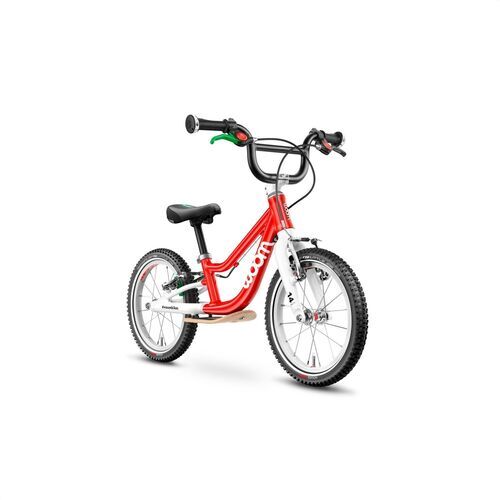
woom vs Bemoov: The Big Picture
woom builds a tightly integrated system around each size: matching A, B and C markings on the saddle and handlebars make it obvious which fit goes with which size, a one-wing chainguard on GO models protects clothing while staying accessible for maintenance, and the lineup is backed by one of the most independently tested kids’ bike ranges anywhere. Bemoov takes a simpler, ergonomics-first approach: the same core fundamentals (light aluminium frames, child-specific geometry, colour-coded brakes) at a generally lower price, backed by a lifetime warranty on the frame and fork and praised by owners for straightforward assembly, though one verified buyer called the price slightly high for what it delivers.
Both brands land within a few hundred grams of each other at every matching size, and both put a steering-limiter strap on their smallest models so an early fall doesn’t twist the handlebars into the front wheel. The clearest difference isn’t safety or build quality: it’s how much independent testing and resale history backs each brand up. woom has years of reviews and a strong secondhand market behind it. Bemoov is newer to that spotlight, with fewer independent tests, though owner feedback consistently mentions the same strengths Bemoov advertises: light weight, easy handling and simple, serviceable brakes.
12in Balance Bikes: woom GO 1 vs Bemoov M12
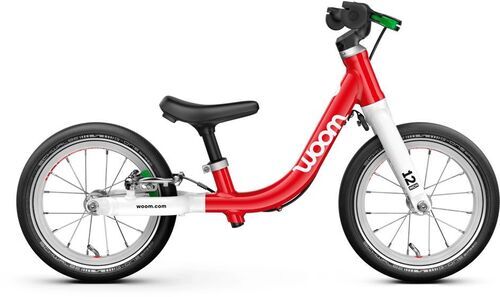
Best for
The youngest riders, first balance bike
Weight
3 kg
Frame
Aluminium
Steering safety
Steering-limiter strap
In one line
“A toddler’s first pair of wings”
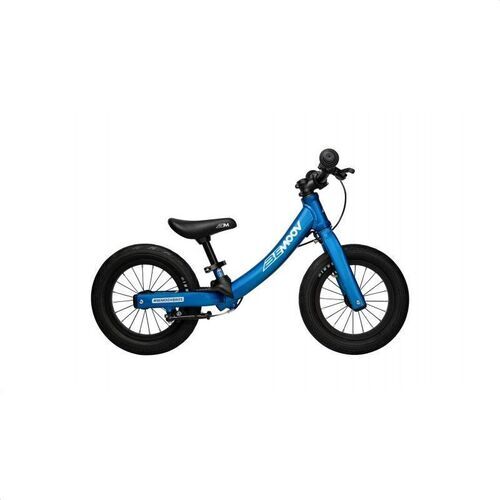
vs.
1.5 to 4 years, 80 to 100cm
3.4 kg
Aluminium
Steering-limiter strap
“A toddler’s runway on two wheels”
14in First-Pedal Bikes: woom GO 2 vs Bemoov M14
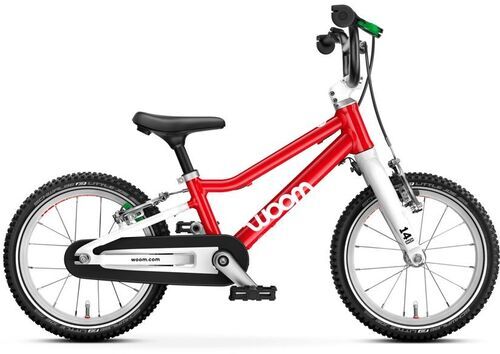
Best for
3 to 4.5 years
Weight
5 kg
Frame
Aluminium
Drivetrain
Single-speed, free-wheeling pedals
In one line
“A feather with pedals”
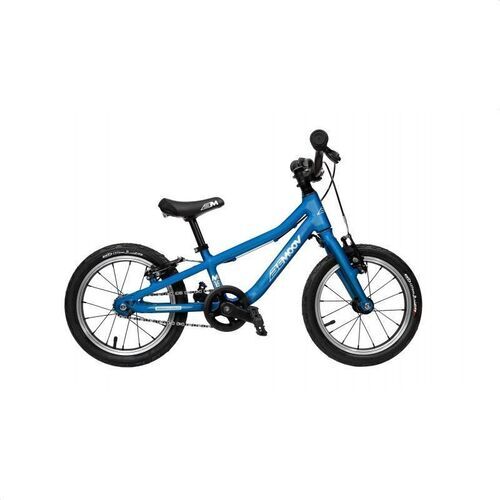
vs.
3 to 4.5 years, 95 to 110cm
5.3 kg
Aluminium
Single-speed, 1 gear
“Pedal kindergarten without stabilizers”
16in Pedal Bikes: woom GO 3 vs Bemoov M16
Best for
4 to 6 years
Weight
5.4 kg
Frame
Aluminium
Drivetrain
Single-speed, free-wheeling pedals
In one line
“A confidence coach on two wheels”
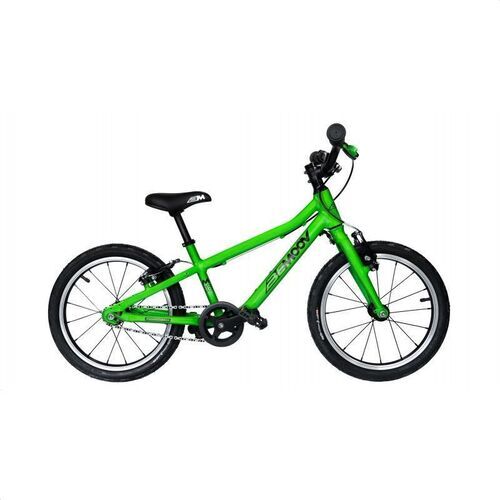
vs.
4 to 6 years, 105 to 120cm
5.7 kg
Aluminium
Single-speed, 1 gear
“A Belgian feather with pedals”
So, Which Brand Should You Choose?
Choose woom if you want the most independently reviewed kids’ bike brand on the market, a lineup that keeps going well past 16in if you’d rather stick with one brand as your child grows, and don’t mind paying a bit more for that track record. The woom GO 1, GO 2 and GO 3 cover balance-bike age through the first proper pedal bike.
Choose Bemoov if the same fundamentals matter more to you than brand pedigree or a long-term lineup: light weight, proper child geometry and colour-coded brakes, at a generally lower price and with a lifetime warranty on the frame and fork. The Bemoov M12, M14 and M16 cover the same three sizes, and refurbed’s Bemoov range currently tops out there, so it’s worth planning for a possible brand switch once your child outgrows it.
Bemoov’s independent review history is thinner than woom’s. That’s a fact worth weighing, not a flaw to hide: owner feedback on Bemoov is consistently positive on the same points the brand advertises.
The Case for Buying a Refurbished Kids’ Bike, Whichever Brand You Pick
Buying a refurbished woom or Bemoov turns the question from “what can I afford new” into “what level of bike does this budget unlock”. The first owner absorbs the steepest part of the depreciation, essentially paying the showroom mark-up so the next buyer doesn’t have to. That’s why the same bike costs meaningfully less once it’s refurbished, without losing what made it worth buying in the first place.
Refurbished isn’t the same as a random secondhand listing. Every bike on refurbed is professionally checked: frame, brakes, wear points and safety features are inspected and reconditioned before it’s listed, and it comes with a minimum 12-month warranty and a free-returns window. The lower price reflects a bit of history, not a question mark over safety.
That combination, real savings plus a checked and warrantied bike, is what makes refurbished the smarter way to buy either brand.
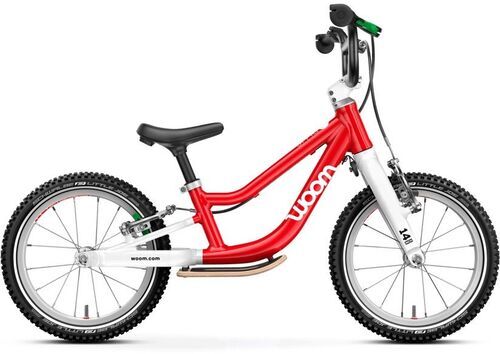
Kids Outgrow Bikes Fast - Refurbished Fits That Reality
Between the ages of two and about sixteen, most children need a bigger bike roughly every fifteen months, which means a bike bought new is often outgrown long before it’s worn out. Buying the next size as a birthday gift keeps the timing predictable, even if the growth spurt itself never is.
There’s a second, quieter upside to buying refurbished for a learning rider: a bike that already has a scuff or two removes the pressure of the first one. A brand-new bike can make everyone overly careful about the odd scrape from a fall or a curb, when what helps a child learn is riding it, dropping it in the grass and getting back on. The first scratch is already history on a refurbished bike, so every ride afterward is just riding.
Quality kids’ bikes like woom and Bemoov hold 70 to 80 percent of their resale value, and that pays off twice here. The next size up is often funded, at least partly, by reselling the one your child has outgrown, passing it forward like a relay baton instead of letting it gather dust in the garage. Buying refurbished plugs into that same cycle from the other side: instead of paying full price for a bike with maybe eighteen months of use ahead of it, you pay a price that already reflects how quickly kids grow.
Outgrown, not worn out, sums up kids’ bikes better than any spec sheet, and it’s exactly why the next size up is worth buying refurbished too.
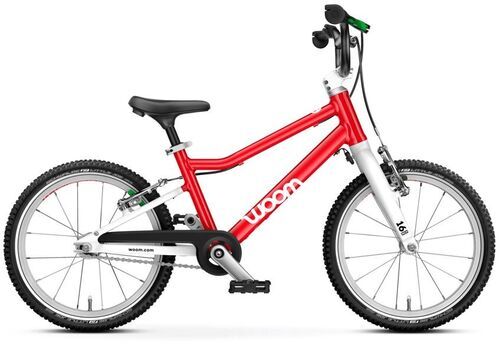
woom vs Bemoov: FAQ
What’s the main difference between woom and Bemoov?
woom has the deeper independent test record and the strongest resale market of the two. Bemoov matches the core fundamentals (weight, geometry, brakes) at a generally lower price, backed by a lifetime frame-and-fork warranty.
Are woom and Bemoov bikes safe for beginners?
Yes. Both use child-specific geometry, colour-coded hand brakes and a steering-limiter strap on their smallest models, and both skip coaster brakes in favour of free-wheeling pedals, exactly what a beginner needs.
What size bike does my child need?
Match height and confidence, not just age: 80 to 100cm for a first balance bike (woom GO 1 or Bemoov M12), 95 to 110cm for a first pedal bike (GO 2 or M14), and 105 to 120cm for the next step up (GO 3 or M16).
Is a refurbished kids’ bike safe to buy?
Yes. Every refurbished bike on refurbed is inspected for frame, brake and wear condition before it’s listed, and comes with a minimum 12-month warranty and a free-returns window, so a lower price doesn’t mean a lower safety bar.
Ready for Back to School 2026 🎒
Back to school 2026 is exactly the moment to size up. Whether you choose woom or Bemoov, buying refurbished means a fully inspected bike, a minimum 12-month warranty and a price that already accounts for how fast kids grow.

Sign up for our newsletter for the first time and save £15!
Never miss an offer again.
Information about the use of personal data can be found in our Privacy policy.
Get the refurbed app
For iOS and Android


Confirm sign-up
Almost done: We’ve sent you a confirmation email
- © Refurbed Marketplace GmbH
- Accessibility
- T&C
- Privacy Policy
- Imprint
- Legal Notices
- Cookie Policy