iPhone 18 Pro Price: What Will Apple’s New Flagship Really Cost? And is it worth it?
by Vanessa Ricca, on Sep 9, 2026The iPhone 18 Pro is one of Apple’s most expensive Pro iPhones yet. But the figure you see in the Apple Store is only one way to measure its price.
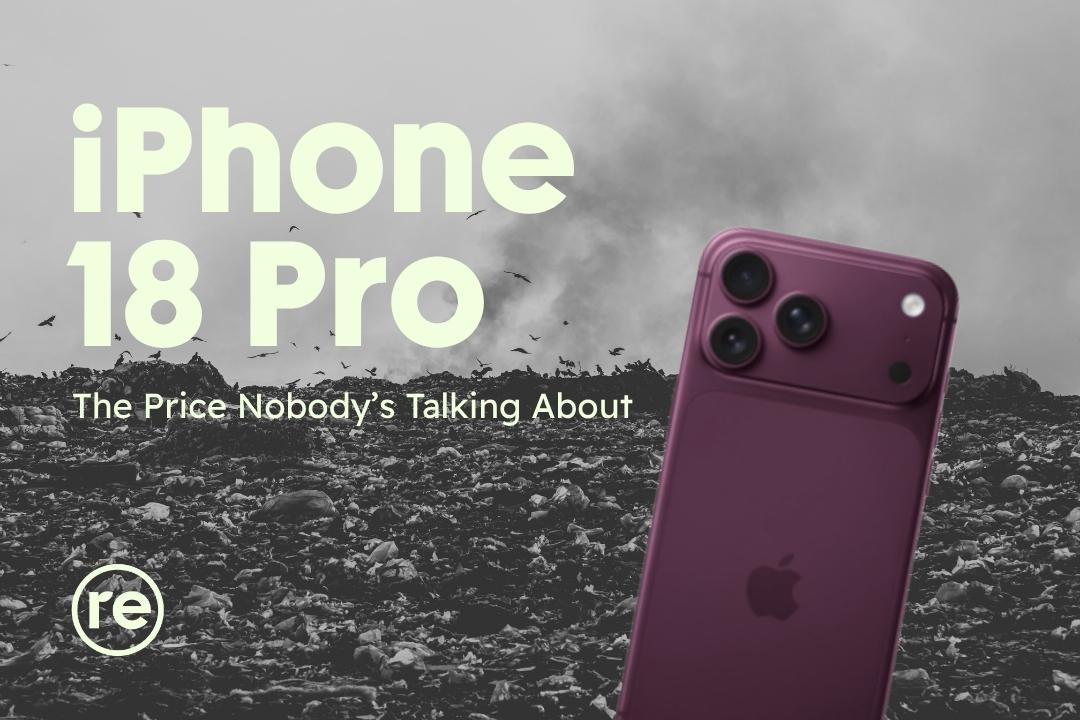
Apple has just officially unveiled the newest iPhone 18 Pro, putting an end to months of speculation about how much its latest flagship would cost. The iPhone 18 Pro starts at $1,199 in the US, while the iPhone 18 Pro Max starts at $1,299.
That makes upgrading to Apple’s latest Pro iPhones an expensive proposition. But there is another price attached to a new iPhone. And you won't find it printed on the box.
Breaking news
Apple has now put an official price on its latest Pro iPhones - and the rumours of a price increase were right.
- iPhone 18 Pro: from $1,199*
- iPhone 18 Pro Max: from $1,299*
Both start with 256GB of storage, making them $100 more expensive than last year’s equivalent Pro models. But now let’s talk about the other costs.
*UK prices not available yet.
Before an iPhone is built, its materials have to come from somewhere
An iPhone may arrive as one immaculate device, but its story begins across mines, refineries and factories. Lithium, cobalt, copper, gold and rare earth elements must be extracted, processed and transported before assembly even begins.
That comes with human and environmental costs, from risks associated with mining to the land, water, energy and emissions involved in producing a new device.
And even though Apple is using more recycled materials (the iPhone 17 Pro contains 30% recycled content by weight), every new phone still carries a heavy material and carbon footprint.
So why keep extracting new resources when so many are already sitting inside perfectly usable phones?
The questions people are raising behind the iPhone 18 Pro chips
Those raw materials are only the beginning of the story. The chips inside an iPhone 18 Pro may be tiny, but the network behind them is anything but. They connect engineers, suppliers, factories and infrastructure across the world - and, increasingly, technologies that process some of our most personal information.
That brings questions that don't fit neatly onto a spec sheet: where was this technology developed? Who are we supporting when we buy it? And how comfortable are we with the systems becoming part of our everyday lives?
There aren't always simple answers. But there is a meaningful difference between creating demand for another new device and giving an existing one another life.
Because buying new doesn't only pay for the object in your hand. It supports the enormous network of companies, facilities, people and investments behind it - and the technologies and choices that come with them.
The price of keeping up
Then there’s the price we pay as consumers.
New technology taps into something powerful: the excitement of novelty and anticipation. A slightly new design, a better camera, the status of owning the latest model - all can make a perfectly functional phone suddenly feel less desirable.
And when that status symbol costs four figures, instalment plans can soften the psychological hit. Research shows that breaking a purchase into smaller payments can make it feel less expensive and encourage higher spending.
But the dopamine rush of something new is short-lived. The payments - and the phone it replaces - can stick around much longer.
From fast tech to e-waste
But the story doesn’t end when a new phone reaches our hands. It also matters where our old technology goes.
New launches encourage a cycle of upgrading and replacing - what we might call fast tech. And as that cycle speeds up, so does the waste it leaves behind.
The world generated a record 62 million tonnes of e-waste in 2022, yet less than a quarter was documented as properly collected and recycled.
Phones contain valuable materials that can remain useful long after their first owner moves on. So perhaps the better question isn’t what comes next - but whether we really need something new at all.
Worth knowing: The AI boom is making iPhones more and more expensive
One of the less obvious forces pushing up the cost of new iPhones is something happening far beyond smartphones: the AI boom.
AI needs enormous amounts of memory. The data centres being built to train and run AI models require huge quantities of high-performance memory chips. As investment in AI infrastructure has accelerated, so has demand from the companies building it.
That demand has consequences for consumer tech. Memory manufacturers have strong incentives to prioritise the rapidly growing AI market, putting pressure on the supply and price of memory used elsewhere - including the RAM and storage found in smartphones.
And Apple isn't immune. Higher component costs can eventually work their way into the price consumers pay for devices. We've already explored how the memory crunch is affecting Apple products in our article on Apple Price Increase 2026: Which Devices Are More Expensive? (And How You Can Still Save).
Let’s pause and ask a bigger question. At a time when resources and production capacity are under strain, do we really need to keep extracting more materials to put millions of new phones into the world every year? Especially when, for many of us, the difference from the phone already in our pocket can come down to incremental upgrades - a slightly better camera, a faster chip, or even a new colour.
When does an upgrade stop being a need and become simply the expectation of something new?
A different way to think about the price of technology
None of this means we need to stop buying technology. It means we need to get better at using the technology we already have.
As consumers, that can mean keeping our phones for longer, repairing them when possible, passing them on when we upgrade, and choosing a refurbished iPhone instead of a new iPhone. Companies and policymakers have a role too: designing devices that last, supporting repair and reuse, and making circular technology easier to choose.
The potential impact is significant. Compared with buying new, a refurbished smartphone without a new battery can avoid around:
- 83% of CO₂ emissions
- 87% of virtual water consumption
- 76% of e-waste
- 69% of critical raw materials
- 97% of conflict materials
That’s why we created the refurbed Product Footprint App: to make the environmental impact of refurbished technology vs new technology tangible. It shows how much CO₂, water, e-waste and valuable resources can be saved by giving an existing device another life.
And choosing refurbished doesn't mean giving up the things people expect when buying a phone. At refurbed, devices are professionally refurbished, come with at least a 12-month warranty and a 30-day free trial, while offering a more affordable alternative to buying new.
The iPhone 18 Pro price tells us what Apple's latest phone costs today. But the bigger question is what we want technology to cost tomorrow.
The most valuable phone isn't necessarily the newest one. It may be the one that already exists.