Thermomix TM31 vs TM5 vs TM6: Which One Should You Buy Refurbished?
Three real generations of Vorwerk's cooking robot are still out there: the TM31, the TM5, and the TM6, and only one of them is still in production. Maybe you already own one and are wondering whether the newer model is worth the switch. Maybe you have never touched any of the three and want to know what changed between them, oldest to newest.
One thing worth knowing early: if you know this machine as a Bimby rather than a Thermomix, you are not wrong. Vorwerk sells the identical appliance under its own separate trademark, Bimby, in Italy and Portugal only. Everywhere else in Europe, it goes by Thermomix.
Quick verdict: TM31, TM5 or TM6?
Thermomix® TM31: the original, fully manual and dial-controlled. A Thermomix TM31 refurbished is the most affordable way into the range if you are happy cooking without guided recipes.
Thermomix TM5: the touchscreen generation. A Thermomix TM5 adds guided cooking, but its Cookidoo connection depends on an external chip rather than built-in WiFi.
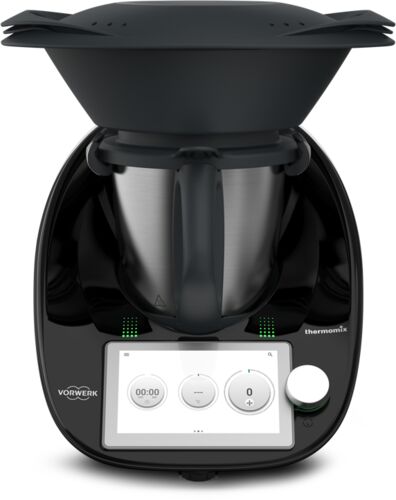
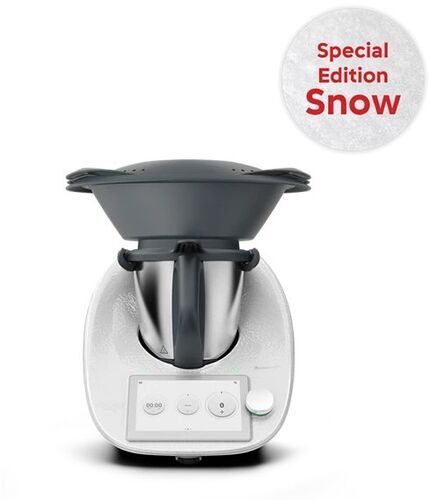
Thermomix TM6: the current model, and the only one Vorwerk still makes. A Thermomix TM6 is the pick for on-device Cookidoo, 1g weighing, and the widest range of automated cooking modes.
What is a Thermomix?
Vorwerk itself calls the Thermomix an all-in-one cooker, and that is a fair description. It is a multifunction cooking food processor: a single bowl that weighs your ingredients, then chops, blends, steams, sautes, and cooks them, all in the same container and all under the machine's control.
That last part is what separates it from a regular food processor or blender. An ordinary food processor prepares food. You still cook whatever you chop or blend on a hob or in an oven afterwards. A Thermomix does both jobs in one bowl: it heats while it mixes, and it holds a set temperature and speed for as long as a recipe needs.
Local names for the category vary a lot across Europe. Germany calls it a Kuchenmaschine mit Kochfunktion, France a robot cuiseur multifonction, Spain a robot de cocina multifuncion. Whatever the local label, the concept underneath is the same.
Why Vorwerk's Thermomix is different from other cooking robots
Bosch Cookit and Magimix's Cook Expert both do guided cooking too, so what makes a Thermomix different is not the idea of a cooking robot. It is Cookidoo, Vorwerk's own recipe platform, and how tightly it wraps around the machine. On the TM6, Cookidoo sets the time, temperature, and speed for each step automatically, draws on a catalogue that runs past 100,000 recipes, and folds in meal planning and shopping lists without leaving the screen.
The bigger benefit shows up in a normal evening, not in a spec sheet. A Thermomix does not chop your vegetables or load your ingredients for you, and cleanup is still cleanup. What it does take off your plate is the constant checking: stirring so nothing catches, watching the clock, adjusting the heat. It works like an extra pair of hands in the kitchen, freeing you to set the table or answer the door while it holds a simmer.
Professional kitchens value the same trait for a different reason. Chefs use it for jobs that reward exact repetition, hot purees, emulsified sauces, ganache, where consistent heat and speed matter more than a recipe screen.
Where a Thermomix is not the best choice
None of this makes a Thermomix the best choice for every kitchen. Bosch Cookit sears at up to 200°C; the TM6 only reaches 160°C, and only inside a guided Cookidoo recipe, not as a free setting. Bowl size tells a similar story: the TM6 holds 2.2 litres, against roughly 3 litres for the Cookit and 3.5 litres for the Magimix Cook Expert, which matters if you regularly cook for a crowd.
Some competitors also bundle dedicated slicing, grating, or whisking attachments, while the Thermomix keeps one main blade in the bowl for almost everything. Cookidoo itself is a recurring subscription on top of the machine's price, and independent reviewers consistently point to that upfront price as the biggest drawback across the range.
None of this is a flaw so much as a different set of trade-offs: more precision and a deeper recipe ecosystem, in exchange for less raw capacity and a higher entry cost.
Meet the three generations: TM31, TM5 and TM6
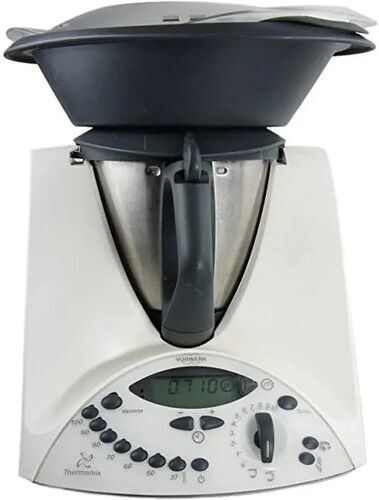
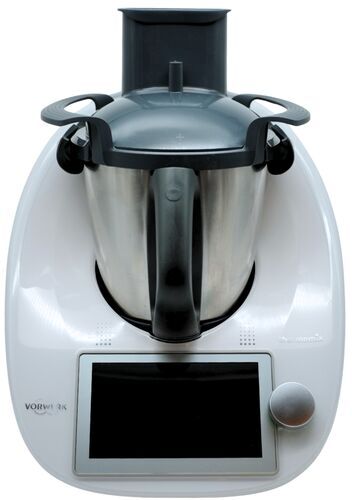
Thermomix TM31: the machine that built the category's reputation. Fully manual, controlled with physical dials and buttons, and built around one job: a heated bowl that chops, mixes, and cooks with no recipe screen at all.
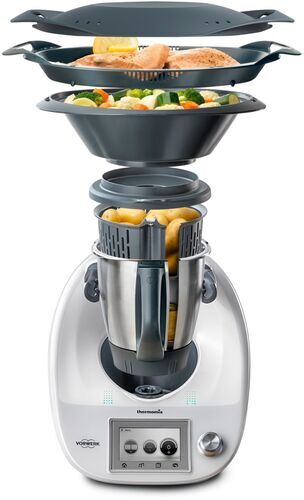
Thermomix TM5: the first with a touchscreen, and the first to offer guided recipes, delivered through a small physical chip rather than a live internet connection.
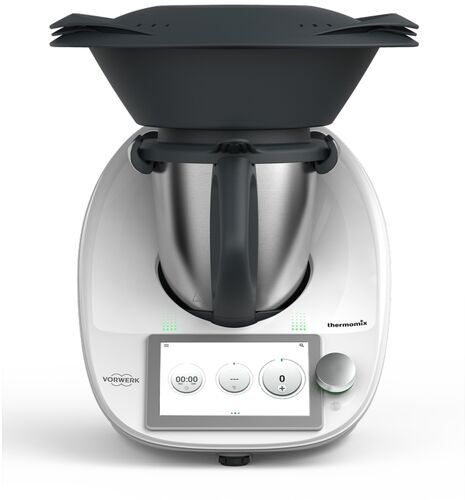
Thermomix TM6: the fullest version of the idea so far, with WiFi, on-device Cookidoo, 1g weighing, and cooking modes the earlier two never had, including fermentation and sous vide.
Vorwerk stopped making both the TM31 and the TM5 some time ago. Either one is now sold and bought secondhand only, out of warranty from the manufacturer, which is exactly where buying refurbished changes the picture.
Thermomix TM31 vs TM5 vs TM6: full spec comparison
Container Volume
2,200 ml
Power
1,500 W
Touchscreen
None (physical dials)
Connectivity
None
From paper cookbook to Cookidoo: how guided cooking evolved
The clearest change across three generations is not a spec at all. It is how a recipe gets onto the machine.
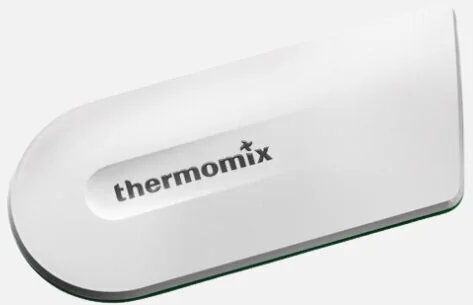
The TM31 never connected to anything. Every recipe came from a printed cookbook, and following one meant reading a page and setting dials by hand. The TM5 introduced guided cooking through small colour-coded chips, a green one for the base cookbook, others for pasta or baby food, that slotted into the machine and displayed steps on its new touchscreen. Vorwerk later folded all of those into a single Cook-Key, which still needed a WiFi sync with Cookidoo.it before its recipes were up to date.
The TM6 drops the chip entirely. Cookidoo lives on the device over WiFi, so a recipe is available the moment you search for it, with no syncing and no separate accessory to keep track of. Two independent reviewers, in two different languages, both single out this change, not the screen size or the extra cooking modes, as the real dividing line between the generations.
Weighing precision and temperature: what changed
Weighing precision moved only once in three generations. Both the TM31 and the TM5 weigh in 5 gram steps, fine for everyday cooking but coarse for anything that needs exact ratios. The TM6 weighs gram by gram, a jump reviewers link to gourmet recipes and precise tasks like homemade cosmetics or cleaning products, where a few grams either way changes the result.
Temperature follows a similar pattern with one twist. The TM31 tops out at 100°C, and only at fixed steps: 37, 50, 60, 70, and so on. The TM5 goes further, up to 120°C, freely adjustable. The TM6 also reaches 120°C freely, then adds a searing mode up to 160 to 170°C, but only inside a guided Cookidoo recipe. You cannot dial the TM6 up to searing heat on your own for a homemade recipe. It is hotter, but only when a guided step calls for it.
Accessories and everyday details that changed
A few everyday parts changed more than the marketing ever mentions. The spatula on both the TM31 and the TM5 is stiff and rigid. The TM6's is soft and flexible, closer to a silicone pot scraper, and noticeably better at getting the last of a sauce out of the bowl.
The measuring cup tells a similar story. On the TM31 and TM5, it sits loose in the lid and can fall out if the machine gets bumped. On the TM6, it clips firmly into place and doubles as a slow oil dispenser, useful for emulsifying mayonnaise while the blades run.
The steaming basket gained a cover on the TM6, which limits how full you can pack it and helps it drain once you lift it out. A splash guard is standard on the TM6 for the same reason it was never needed on the TM31 or TM5: neither of the earlier machines reaches searing temperatures. None of the three shares a bowl or blade with the others, and the TM6's blade assembly even sits slightly higher than the TM5's, purely to leave room for searing or browning meat.
Fermentation, sous vide and TM6's extra functions
The TM6 added an entire menu of functions the earlier two never had, reachable with a swipe on the touchscreen. Alongside fermentation, useful for yeast dough or homemade yogurt, it includes a dedicated sous vide mode in exact 1-degree steps, a reheat function, a boiled-egg setting, rice cooking, grating, peeling, and a five-level bowl-cleaning cycle.
Sous vide is the one point where the record is not perfectly clean. One source describes the TM5 as capable of a rough version of sous vide, just in coarser 5-degree steps, while others treat it as a new TM6 function. Both readings are defensible: it depends whether you count a wider temperature range as a new feature or the same feature done better. Fermentation itself is new to the TM6 either way. Neither the TM31 nor the TM5 offers it at all.
Noise and long-term durability
The TM5's control dial has an audible click and whirr when you turn it. The TM6's turns almost silently by comparison. Cooking noise itself has only been measured on the TM6: roughly 60 decibels during normal use like soup or risotto, rising sharply at maximum blending speed.
Long-term wear data tells a similarly one-sided story. One TM6 owner's review after a year and a half of regular use found the motor still looking new, the factory screen film never removed and the screen underneath unscratched, and the blade still performing well, with only light external scratches she traced back to her own dishwasher habits.
That's useful evidence for the TM6, but no equivalent long-term test exists yet for the TM5 or the TM31.
Price and which Thermomix model should you buy
Reliable new-unit pricing only turns up for the Benelux market, so use these figures as a directional guide rather than a Europe-wide rule. A TM5 there runs roughly €1,065 to €1,100 new, plus around €129 for the Cook-Key needed to match the TM6's built-in connection. A TM6 runs roughly €1,229 to €1,269. Add the accessory to the TM5's price and the real gap to a TM6 often lands around €40, far smaller than the headline prices suggest. Buying secondhand widens that gap again: a well-kept TM31 or TM5 typically costs meaningfully less than a refurbished TM6 while still cooking just as well on its own terms.
So which model should you buy? If this is your first Thermomix and you want guided cooking without a learning curve, the TM6 is the easiest choice. If you already own a TM5 or a TM31 and are weighing an upgrade, weigh the shrinking price gap against the fact that your current machine is out of warranty either way. Precision and gourmet cooking favour the TM6's 1g scale. Home bakers and anyone fermenting favour its fermentation mode. If you already own several TM5 bowls or accessories, remember none of them fit a TM6.
Buying a refurbished Thermomix is better for the planet
Small kitchen appliances get recycled at far lower rates than phones or laptops. Most people know to bring an old phone back to a shop or a collection point; far fewer do the same for a blender or a food processor, and a lot of otherwise-working kitchen equipment ends up in general waste instead.
That makes a Thermomix a particularly poor candidate for landfill. It is built around a precision motor, a full display, and on the TM6 a WiFi module, all repairable components in a machine designed to last a decade or more. Buying refurbished keeps one of those machines in a kitchen instead of a bin, and avoids manufacturing a new motor and a new set of electronics from scratch. Based on typical figures for refurbished electronics, that choice saves in the range of 70kg of CO2 and 100,000 litres of water compared with buying new.
Buying a refurbished Thermomix is better for your wallet
A Thermomix is not a small purchase, and that is exactly why buying refurbished pays off more here than it does on everyday kitchen gadgets. New prices sit well above most other countertop appliances, and unlike most of them, a Thermomix holds its resale value unusually well, so the saving on a refurbished unit is large in real money, not just as a percentage.
Kitchen appliances like this stay in service for years, often a decade or longer, so a lower purchase price keeps paying off for the entire time you own it, not just for one upgrade cycle like a phone. On refurbed, every Thermomix is refurbished, meaning it's professionally tested, cleaned, and checked before it's ever listed, not just resold as-is like a typical secondhand find. That comes with a warranty and a trial period too, so a big one-off purchase like this carries far less risk.
Thermomix TM31 vs TM5 vs TM6: frequently asked questions
Is a Bimby the same as a Thermomix?
Yes. Bimby is Vorwerk's own trademark for the identical machine, used only in Italy and Portugal. Every other European market calls it Thermomix.
Is a secondhand TM31 still worth buying?
Yes, if you want manual cooking rather than guided recipes. It is fully out of production and out of warranty from Vorwerk, but the core chop-and-cook function still works exactly as it always did.
Do TM5 accessories work on a TM6?
Not the bowl or blade. Those are not interchangeable across any of the three generations because of the temperature difference. Some external accessories cross over, but check the specific one before assuming it fits.
Does the TM6 beat the TM5 at sous vide?
Sources disagree. The TM6 offers exact 1-degree steps through a dedicated mode, while the TM5 could approximate the same result in coarser 5-degree increments, so the honest answer depends on how strictly you define a new function.
What is the real price difference between a TM5 and a TM6?
Much smaller than it looks. Once you add the Cook-Key a TM5 needs to match the TM6's built-in connection, the gap often comes down to around €40.

Sign up for our newsletter for the first time and save £15!
Never miss an offer again.
Information about the use of personal data can be found in our Privacy policy.
Get the refurbed app
For iOS and Android


Confirm sign-up
Almost done: We’ve sent you a confirmation email
- © Refurbed Marketplace GmbH
- Accessibility
- T&C
- Privacy Policy
- Imprint
- Legal Notices
- Cookie Policy