Surface laptops in 2026: lineup, longevity and what to buy
Microsoft's 2026 launches brought a 13-inch second edition (shipping from 13 October) and the Surface Laptop Ultra (shipping from 16 October). Next to the Snapdragon X2 Laptops and the Intel business models, the name Surface Laptop now covers chips from three makers: Qualcomm, Intel and NVIDIA. So a model name no longer tells you what kind of laptop you get.
Which one fits your work, and does a new one change the answer? Three facts shape it. Making a laptop is the biggest reported carbon cost: about 69 to 75% of the lifecycle total in Microsoft's own 2026 estimates. A more efficient chip does not make replacing a working laptop better for the environment by itself. And repair access and support have improved, so a laptop from recent years can stay useful for longer. For everyday work, a refurbished Surface Laptop from recent years is a good choice; a new one needs a specific reason.
On refurbed, refurbished means professionally checked, cleaned and reconditioned by experts, with a minimum 12-month warranty. The Surface Laptop 4 and Surface Laptop 5 are in the range, and the refurbished Microsoft laptops category shows the rest.
You get the lineup, the launch rhythm, repair and support dates and Microsoft's own carbon data, so you can choose with the facts in hand.
Surface Laptop Ultra: what is confirmed and what is still missing
Microsoft introduced the Surface Laptop Ultra on 31 May, opened preorders on 7 October, and availability begins on 16 October 2026. It is a new branch of the Laptop family, not the next number of the standard Laptop.
Platform and memory: NVIDIA RTX Spark N1X, an Arm-based CPU with a Blackwell graphics processor, in two versions (18 CPU and 5,120 GPU cores, or 20 CPU and 6,144 GPU cores), with 24 to 128 GB of memory shared by the CPU and GPU.
Body and battery: a 15-inch mini-LED touchscreen, about 2 kg and under 18 mm thick. Microsoft's tests say up to 15 hours of local video (on a pre-release model) or 12 hours of web browsing.
Three details change how to read the advertised numbers. The advertised figure of one petaflop is theoretical speed at very low numeric precision (FP4 with sparsity), not general computing speed, and it does not compare with another laptop's NPU rating. The 128 GB is the total shared memory, and the graphics processor cannot address all of it. A model with 120 billion parameters, stored at four bits each, takes about 60 GB before the software and the operating system take their share, so the 24 GB version cannot be assumed to run models that size (arithmetic, not a tested recommendation).
What is still missing:
Carbon: no lifecycle profile for any Ultra configuration was found, so the 24 GB and 128 GB versions cannot be compared.
Energy in use: no independent measurement of sustained rendering, local AI or agent sessions was found, and the charger's 140 W rating is not the laptop's typical power use.
Cost to make: no verified parts list, chip yield or factory cost was found, so a retail price says nothing about what the laptop costs to build.
Repair in practice: parts prices, service turnaround and real survival rates are unknown.
Chemicals and end of life: a carbon total cannot settle chemical risks or what happens to devices once they are collected.
If you are weighing a wait, the buy-or-wait guide covers the timing.
The rest of the 2026 Surface Laptop family
A generation number alone does not name the processor, size or market segment, so the models need telling apart.
13-inch, second edition (ships from 13 October): Snapdragon X2 Plus with 6 cores, 16 or 24 GB of memory and a removable 256 or 512 GB UFS drive.
13.8-inch and 15-inch, eighth edition: Snapdragon X2 Plus with 10 cores or X2 Elite with 12 cores, up to 64 GB of memory, a removable SSD of up to 1 TB, and a microSD reader on the 15-inch.
Intel business models: Intel Core Ultra 5 or X7 Series 3 chips with Windows 11 Pro, in 13.8-inch and 15-inch sizes.
Four details are easy to confuse:
13-inch is not 13.8-inch. They are different models with different chips and storage.
A generation number needs a chip name. The seventh edition label covers Intel business models and Snapdragon models, and the Intel 13-inch business model is a separate laptop.
Windows edition on the Ultra. The consumer version with 24 GB comes with Windows 11 Home, versions with 32 GB or more come with Windows 11 Pro, and the business Ultra has Pro even at 24 GB.
UFS is not an SSD, and touch is not pen. The 13-inch's removable drive is a different module from the SSD in the larger Laptops, and the new clamshell Laptops are specified for touch, so pen work belongs with the Laptop Studio.
The Snapdragon and RTX Spark models run Windows on Arm. Native Arm apps work best, and the Prism translation layer runs many x86 and x64 apps, but drivers need Arm64 versions, and some older utilities, plug-ins and games with incompatible anti-cheat systems do not work. The Ultra's NVIDIA graphics do not change that, since its CPU is Arm too. Check the apps and peripherals you rely on. Intel-based Laptops run x86 software natively, so the question never comes up, and the refurbished Microsoft laptops include several Intel generations.
How often Microsoft launches a new Surface Laptop
There is no fixed schedule. 2026 came in waves: 19 May for the Intel business models, 31 May for the Ultra's introduction, 16 June for the standard Snapdragon X2 Laptops, 23 September for the 13-inch second edition and 7 October for the Ultra preorders.
Software and events keep their own calendars. The Build developer conference ran on 2 to 3 June, the Ignite IT conference runs on 17 to 20 November, Windows 11 gets one feature update a year (26H2 arrived on 29 September) and security updates come monthly. The 26H1 label does not mean two feature updates a year: Microsoft describes it as support for new early-2026 devices.
2019, Laptop 3: added a 15-inch size, AMD options, USB-C and a removable SSD.
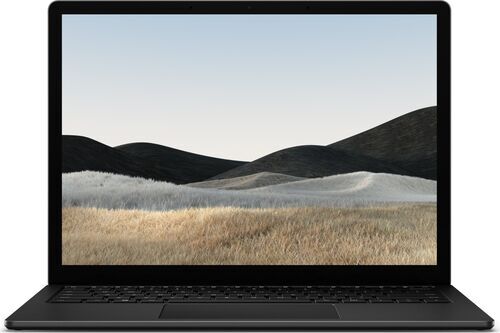
2021, Laptop 4: offered Intel and AMD in both sizes on the same design.
2022, Laptop 5: went Intel only, with 12th-generation processors and Thunderbolt 4.
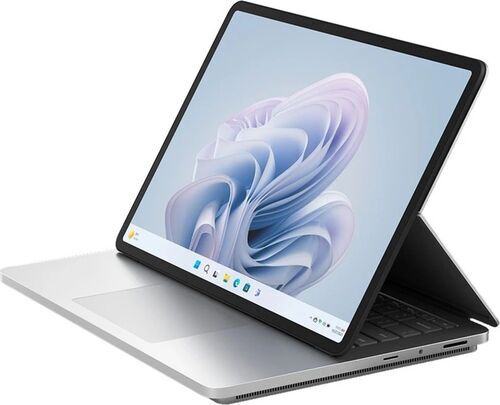
2023, Laptop Studio 2: combined Intel and NVIDIA chips with a folding display and pen positions.
One correction: the Ultra is not the first Surface with NVIDIA graphics, since the Surface Book offered them in 2015.
Launches follow no fixed schedule, so waiting for the next model means waiting for an unknown date. A generation's age also says little about whether it still fits the job. refurbed offers the Laptop 3, Laptop 4 and Laptop 5 refurbished.
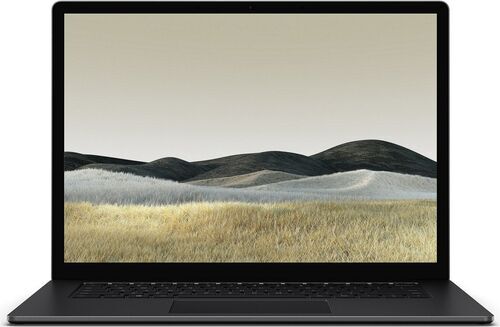
Surface Laptop 3, 4, 5 and Studio 2 side by side
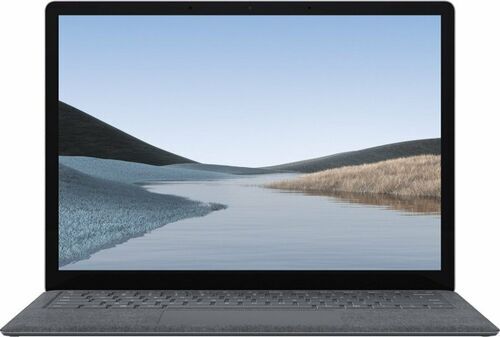
Year of release
2019
Processor
Intel Core i5-1035G7
Cores
4
Memory type
LPDDR4X
Screen size
13.5 inches
Weight
1.25 kg
Ports
USB-C, USB-A, audio jack
Bluetooth
5.0
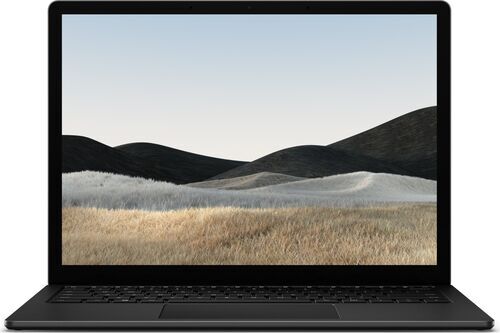
vs.
2021
Intel Core i5-1135G7
4
LPDDR4
13.5 inches
1.29 kg
USB-C, USB-A, audio jack
5.0
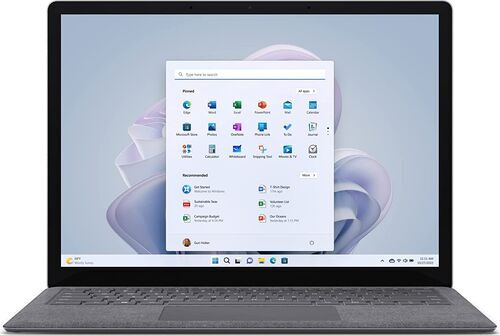
vs.
2022
Intel Core i5-1235U
10
LPDDR5
13.5 inches
1.27 kg
Thunderbolt 4, USB-C, audio jack
5.1
2023
Intel Core i7-13700H
14
LPDDR5X
14.4 inches
1.98 kg
2 x Thunderbolt 4, USB-A, audio jack
5.3
Surface Laptop repairability and support: how they have changed
How long a Surface lasts depends on whether it can be opened, repaired and kept up to date.
iFixit scored the original Laptop (2017) 0 out of 10, the Laptop 3 (2019) 5 out of 10 and the Laptop 7 (2024) 8 out of 10. The 2024 model has a removable lower cover, a screwed-in battery and QR links to service guides.
Ultra (2026): Microsoft lists the battery, SSD, fans, display and ports as service parts. The CPU and memory sit in the motherboard assembly, and no independent repair score is known yet.
A replaceable SSD does not mean replaceable memory. And the scores 0, 5 and 8 are repair ratings, not an environmental scale: an 8 out of 10 laptop is not eight times more sustainable.
Support matters as much as repair access. Microsoft's minimum for driver and firmware support moved from four years (devices released before 1 January 2021) to six years (later devices), so the Laptop 3 falls under the older minimum and the Laptop 4, Laptop 5 and Studio 2 under the newer one. Published end dates run to 3 October 2029 for the Laptop Studio 2 and 10 September 2030 for the Snapdragon Laptop 7. They are driver and firmware dates, not a promise that every part or app stays available until that day.
The refurbed range includes the Surface Laptop 3 and the Laptop Studio 2, the two generations that the score and the date describe.
Surface Laptop choices: work first, AI claims second
Choose by the work you do, not the newest AI label.
Everyday work, study and office apps: choose a refurbished Surface Laptop 5 or Surface Laptop 4. Both run x86 software natively, and the Laptop 5 adds Thunderbolt 4. Their software compatibility, repair and support records are there to check, with no new production run behind a refurbished purchase.
Pen, sketching and creative work: choose the Laptop Studio 2. Its folding display and pen positions do work the new clamshell Laptops, specified for touch, cannot replace. Microsoft publishes driver and firmware support until 3 October 2029. Stock changes, so check the listing.
Newer chips and on-device AI: consider the new Snapdragon models after checking your apps and Arm64 drivers. Their 80 TOPS NPU is a dedicated AI block, not a measure of overall speed. Microsoft claims up to 58% faster graphics on its own benchmark; the new models also offer a denser 15-inch screen. Read Microsoft's performance and battery figures as its own tests.
Large local AI models on Windows: the Ultra is the choice to examine. It could serve as an AI-agent host or a workstation for large models at home. The separate buy-or-wait guide covers the timing.
Microsoft's October message is hybrid intelligence: tasks can run on the laptop or in the cloud, with containment and identity controls for AI agents. Microsoft Execution Containers are generally available on Windows 11; Meta's Muse app for Windows is still described as coming soon. A launch demo does not mean every announced feature is already installed on every PC.
Local AI changes costs and control, not carbon automatically: it can shift spending from cloud usage fees for tokens to your own hardware, electricity and maintenance, while giving you more direct control over some data. The infrastructure does not disappear; it moves to you. For a fair carbon comparison, count the energy for the same finished task at the same quality: laptop power, cloud power including data-centre support, network transfers, any extra hardware purchase and model training on both sides. A weaker local result is not equivalent just because it uses fewer watts. An occasional local task on a laptop you already own adds mainly electricity; buying an Ultra chiefly for that work also adds a share of its production emissions.
Buy capacity for the years you will use it: match your heaviest regular task, rather than buying the largest configuration by default. Each step up adds production carbon, though enough capacity to avoid an early replacement can be worthwhile. In Microsoft's table, the largest Laptop 7 configuration has about 35% more lifecycle carbon than the smallest. See how much memory local AI needs.
Every laptop on refurbed is refurbished by experts and comes with a minimum 12-month warranty and a 30-day free trial. Browse the refurbished Microsoft laptops range.
When a Surface footprint falls but total emissions rise
A smaller footprint for one laptop does not mean total emissions are falling. Microsoft's matched 13.8-inch Snapdragon lifecycle estimates fell from 204 to 154 kg CO₂e between 2024 and 2026. That is a 24.5% reduction at the same 16 GB of memory, 512 GB of storage and modelled 4.5-year life.
Over FY2024 to FY2025, Microsoft's company-wide GHG Protocol total instead rose from 16.693 to 21.121 million tonnes CO₂e, up 26.5%. Under its separate management criteria, the total rose from 16.215 to 20.290 million tonnes, up 25.1%. Keep those two ledgers separate. Within the GHG Protocol figures, capital-goods emissions rose from 6.291 to 9.044 million tonnes CO₂e. A lighter footprint per device can sit alongside growth at company scale.
The pattern extends beyond Microsoft: the IEA reports that data-centre electricity demand grew 17% in 2025 even as energy per AI task fell rapidly. Microsoft also changed its annual neutrality accounting in February 2025, stopping the use of specified spot energy certificates and credits from certain existing carbon-removal projects. Neither Microsoft's company-wide totals nor global data-centre demand is a Surface emissions figure.
Surface Laptop carbon footprint: where the emissions come from
These are Microsoft's own estimates for named reference configurations. They cover the device, power supply and packaging over a modeled service life (4.5 years for the recent ones), and they are not measurements of your laptop. No lifecycle profile for the Ultra was found, so none is quoted.
Where it comes from: the 2026 13.8-inch Snapdragon reference (16 GB, 512 GB) adds up to 154 kg CO₂e: production 115 kg, transport 22 kg, use 17 kg and under 1 kg at end of life. Production is about 75% of that, and about 69 to 75% across the 2026 reference profiles. Production covers raw materials, chips and memory (a chip factory uses large amounts of electricity, process gases and chemicals), enclosures and final assembly.
The record, with a caution: Microsoft's profile for the Laptop 4 (2021, Intel i5, 8 GB, 256 GB) shows 145 kg in total on a three-year model. The Laptop 5 (2022, Intel i7, 16 GB, 256 GB) shows 255 kg on a 4.5-year model, and the 2026 13.8-inch shows 154 kg on a 4.5-year model. Configurations, service lives and methods differ, and a 4.5-year model assumes 50% more use than a three-year one, so the three are no trend line.
A fairer comparison: at the same size, 16 GB of memory, 512 GB of storage and a 4.5-year life, the 13.8-inch Snapdragon Laptop falls from 204 kg (the 2024 Laptop 7) to 154 kg in 2026, 24.5% lower, and the Intel business 13.8-inch falls 15.6%. These are calculations on Microsoft's estimates, and they do not show that the chip caused the fall.
How to read a green claim:
40% lower: compares the 2026 laptop with a hypothetical version of itself built without its sustainability measures, not with last year's model.
66% recycled enclosure: the Ultra for Business figure covers named enclosure assemblies only (one uses recycled aluminum, the magnets use recycled rare earths), not 66% of the laptop.
100% recycled cobalt: a share of the cobalt in the battery, not of the battery's weight or of the whole device.
Recycled and carbon-free: recycled content can mean factory scrap, not recovered old laptops. Carbon-free electricity includes verified certificates, which does not show that every chip-making step ran on carbon-free power at every hour.
E-waste: UNITAR counted 62 million tonnes of electronic waste worldwide in 2022, and only 22.3% was documented as formally collected and recycled. These are global electronics figures, not a Microsoft number. A lower carbon total also does not show lower toxicity, chemical waste or resource use.
Can a new Surface Laptop's energy savings offset the carbon of making it?
Capacity has a footprint: in Microsoft's table for the 13.8-inch Laptop 7, the 16 GB, 256 GB version shows 190 kg in total, 16 GB with 1 TB shows 232 kg and 64 GB with 1 TB shows 257 kg. The largest is about 35% above the smallest over the lifecycle. These figures hold modeled use constant and do not carry over to the Ultra's 128 GB. Extra capacity that prevents an early replacement can still pay off: the trade-off is useful life against extra production.
The replacement calculation, illustrated: production plus transport for the 2026 13.8-inch is 115 + 22 = 137 kg upfront (not an Ultra figure). Divide that by the carbon in the electricity a replacement saves each year. At an illustrative 0.40 kg CO₂e per kWh, saving 5 kWh a year takes about 68.5 years to repay it, saving 20 kWh about 17 years and saving 100 kWh about 3.4 years. The savings and the grid value are hypothetical. The calculation assumes the new laptop is an extra purchase, the old laptop stops being used and the same work moves to the new one, and it leaves out repair, disposal and cloud use.
For scale, in Microsoft's standard usage model each of these laptops uses between 6.3 and 13.0 kWh a year, so a saving of 20 kWh a year is more than the whole annual use of any listed profile. Long, demanding workloads are different, and a standard figure is not an AI energy budget.
Service life: spreading 137 kg over six useful years instead of three cuts the upfront share from 45.7 to 22.8 kg a year. It does not erase emissions already released.
A laptop that already exists: a refurbished Surface Laptop has its production behind it, and each extra year of use divides that share further. Read that as logic, not as a measured saving. The refurbished Surface Laptop 5 is one example.
A separate study: Fraunhofer Austria's savings for a refurbished Surface Laptop 3, against a new equivalent, come from its own method, so they are not added to or compared with Microsoft's figures.
↓ Surface Laptop 3 (128 GB): SAVED 286.6 kg CO₂e | 72,947.8 L water | 1337.9 g e-waste
Based on scientific research by Fraunhofer Austria, calculation model verified according to ISO 14040/14044 standards.
Surface Laptop FAQs
Is the Surface Laptop Ultra a normal Surface Laptop, and when does it ship?
No. It is a separate branch with an NVIDIA RTX Spark chip and 24 to 128 GB of shared memory, while the current standard Laptops use Snapdragon X2 chips. Preorders opened on 7 October 2026 and availability begins on 16 October. The buy-or-wait guide covers whether to wait.
How often does Microsoft release a new Surface Laptop?
There is no fixed schedule. 2026 brought announcements in May, June, September and October. Build and Ignite are annual conferences, and Windows 11 gets one feature update a year.
Does a newer Surface Laptop pay back its carbon?
Rarely, for a working laptop. In Microsoft's 2026 profile, making and shipping a 13.8-inch Laptop adds up to 137 kg CO₂e, and saving 20 kWh a year at 0.40 kg per kWh would take about 17 years to repay it. These are illustrative figures, not a measured result.
Can you repair a Surface Laptop?
Newer ones, yes. iFixit scored the original Laptop 0 out of 10, the Laptop 3 5 out of 10 and the Laptop 7 8 out of 10. The Ultra lists its battery, SSD, fans, display and ports as service parts, while its memory sits on the motherboard.
Does 66% recycled mean a laptop is two-thirds recycled?
No. Microsoft's 66% for the Ultra for Business covers named enclosure assemblies only, such as one that uses recycled aluminum and the magnets with recycled rare earths, not the whole laptop.
Is a refurbished Surface Laptop 5 still worth buying?
Yes, for everyday work. It runs standard Windows apps on an Intel chip, and as a laptop released after January 2021 it falls under Microsoft's six-year minimum for driver and firmware support. refurbed offers the Surface Laptop 5 refurbished by experts, with a minimum 12-month warranty and a 30-day free trial. The condition grades describe appearance only.
Find your refurbished Surface Laptop
Browse the range and find the Surface that fits your work, refurbished by experts and backed by a minimum 12-month warranty and a 30-day free trial.

Sign up for our newsletter for the first time and save £15!
Never miss an offer again.
Information about the use of personal data can be found in our Privacy policy.
Get the refurbed app
For iOS and Android


Confirm sign-up
Almost done: We’ve sent you a confirmation email
- © Refurbed Marketplace GmbH
- Accessibility
- T&C
- Privacy Policy
- Imprint
- Legal Notices
- Cookie Policy