Samsung Galaxy Z Fold vs Z Flip: which foldable should you buy, refurbished?
Some reviewers nickname them a flippy boy and a foldy boy, and that's not far off. The Z Fold and Z Flip are Samsung's two answers to the same question: what should a folding phone do? They're not rivals for the same job. One opens into something closer to a small tablet. The other folds down to the size of a smartwatch in your pocket. Both lines span two real generations worth comparing, Z Fold 4 and Z Flip 4 through Z Fold 6 and Z Flip 6, and either one makes sense refurbished.
Quick verdict: Fold or Flip?
Get the Z Fold if you want a second screen for multitasking, note taking, reading, or travel. It's the closer thing to a small tablet, and the extra screen real estate is the whole point. Get the Z Flip if pocketability, weight, and price matter more than a bigger canvas. It's a fun, compact daily driver, not a productivity device. One line to remember: Flip is for showing off, Fold is for getting things done.
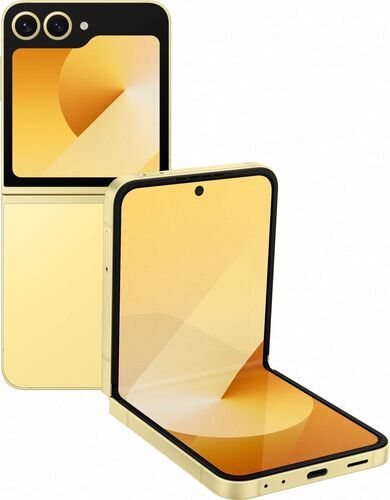
What makes a phone foldable?
Foldable phones generally fall into two familiar shapes. Book style foldables unfold into a tablet sized screen, Samsung's approach with the Z Fold. Clamshell foldables fold down into a smaller square, Samsung's approach with the Z Flip. Other ideas have been tried too. Some phones fold outward, leaving glass exposed on both sides even when closed, more fragile in daily use. Others bolt two separate screens together with a visible seam rather than using one flexible panel. Samsung wasn't first to either shape. Book style and clamshell foldables existed before the Z Fold and Z Flip, but Samsung let those earlier attempts take the early risk, then refined its own versions into the most reliable ones on the market.
Z Fold vs Z Flip: two different bets on what folding is for
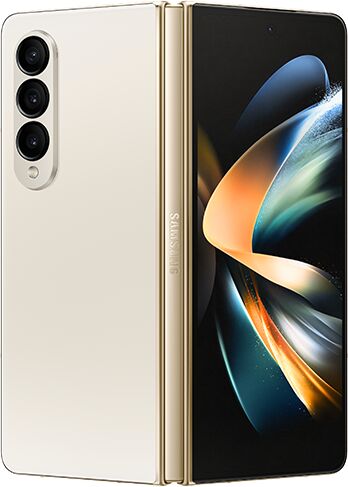
The split is clearest on the original pairing: the Z Fold 4 and the Z Flip 4. Folded shut, a Z Flip is roughly the footprint of a smartwatch sitting in your pocket. Unfolded, a Z Fold is closer to a small tablet. They're opposite ends of a size spectrum, not two versions of the same phone. A gaming comparison captures it well: using the Fold feels like holding a two screen handheld built for sit down multitasking, using the Flip feels like snapping open a small clamshell built for quick, portable use. The Fold's extra bulk is an unexpected plus on phone calls too. A thicker body wraps around your hand more naturally than a slim slab that ends up feeling pinched. The Flip earns its own kind of love: physically snapping it shut to hang up a call is one of the most satisfying gestures a smartphone has ever offered. Flip is for showing off. Fold is for getting things done.
Galaxy Z Fold 4 vs Z Flip 4: the base generation, spec for spec
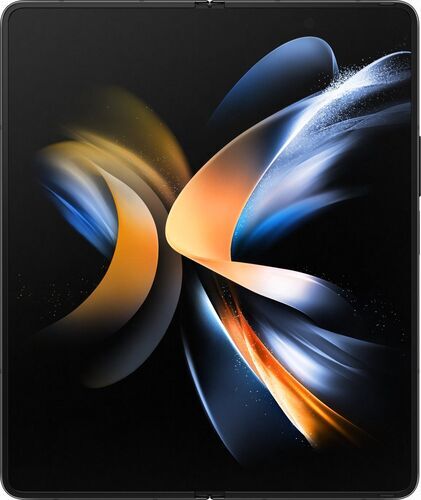
Display
7.6" foldable + 6.2" cover
Chipset
Snapdragon 8+ Gen 1
RAM
12 GB
Rear Camera
50 MP + 10 MP tele + 12 MP ultrawide
Battery
4400 mAh
Weight
263 g
Connector
USB-C 3.2
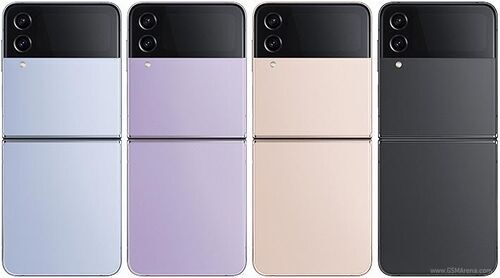
6.7" foldable + 1.9" cover
Snapdragon 8+ Gen 1
8 GB
12 MP + 12 MP ultrawide
3700 mAh
187 g
USB-C 2.0
Does the crease bother you day to day?
Both lines have a crease where the screen folds. That hasn't changed generation to generation, only how visible it is. On the Fold, the crease barely registers: reading or scrolling a big screen is almost always a vertical motion, and a thumb moving down a 7.6 inch display never crosses the fold line. Reading an article on an unfolded Z Fold feels closer to reading a book than using a phone. The Flip has the opposite problem. Its crease runs horizontally across a normal width screen, so every vertical scroll crosses straight over it, which makes it far more noticeable in daily use even when the physical crease itself is shallower than the Fold's. There's an upside hidden in the Flip's extra step, too. Having to physically open the phone before you can scroll works like a built in pause against mindless, endless scrolling.
Two generations later: what changed with Z Fold 6 and Z Flip 6
Software matured the most. Both the Z Fold 6 and Z Flip 6 gained a shared set of AI features that didn't exist on the Z Fold 4 or Z Flip 4: Circle to Search, Gemini powered note formatting and summarising, automatic paragraph and heading structure for handwritten or typed notes, a built in spelling assistant, sketch to image generation that turns a rough drawn shape into a styled picture, and voice memo transcription. Hardware evolved in opposite directions across the two lines. The Fold's battery capacity plateaued outright: the Z Fold 6 carries the same 4400 mAh cell as the Z Fold 4, two generations apart, with the newer chipset's efficiency doing the real work instead of a bigger battery. The Flip made the bigger leap. Battery grew from 3700 mAh to 4000 mAh, and the cover display grew from a barely there 1.9 inch strip to a usable 3.4 inch screen you can answer messages and check notifications on without unfolding at all. If you're deciding between generations rather than between Fold and Flip, the bigger jump happened on the Flip side.
Galaxy Z Fold 6 vs Z Flip 6: the current generation, spec for spec
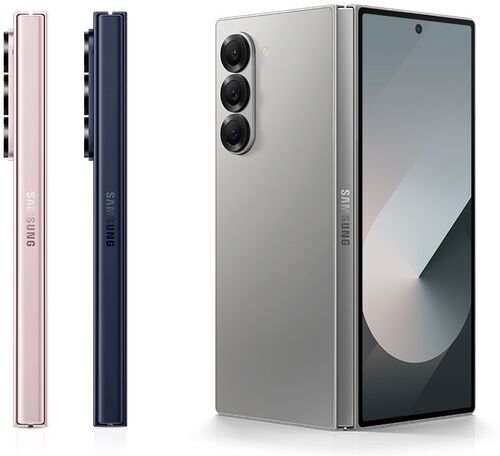
Display
7.6" foldable + 6.3" cover
Chipset
Snapdragon 8 Gen 3 for Galaxy
RAM
12 GB
Rear Camera
50 MP + 10 MP tele + 12 MP ultrawide
Battery
4400 mAh
Weight
239 g
Connector
USB-C 3.2
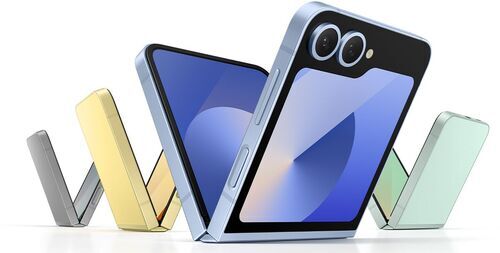
6.7" foldable + 3.4" cover
Snapdragon 8 Gen 3 for Galaxy
12 GB
50 MP + 12 MP ultrawide
4000 mAh
187 g
USB-C 3.2
Where the category is headed next
Samsung has since split the Fold line into a standard tier and an Ultra tier, alongside a new Flip generation. Early hands on impressions held the newest Ultra model next to a passport and found it barely bigger, a sign of just how thin the category has gotten. First year flagship pricing is a famously poor guide to value, though. The previous top of the line Fold model was already selling for roughly 1200 euros within about a year of its launch. For a refurbished buyer, the practical takeaway doesn't change: waiting for the newest generation rarely beats buying last generation's Fold or Flip today, once it's tested, warrantied, and in stock.
Which Samsung foldable should you buy?
Multitaskers and note takers who want a second, bigger screen should get the Z Fold 6 or Z Fold 4. Split screen multitasking and a proper reading sized display are the whole appeal. Frequent travellers land in the same camp: folding down to a smaller footprint for a tray table, then unfolding to a full screen, is a genuine travel perk. Buyers who want the lightest possible daily carry should get the Z Flip 6 or Z Flip 4. Anyone who'll love physically snapping the phone shut to end a call leans Flip too, though the Fold is unexpectedly comfortable to hold through a long call despite being the bulkier device. Budget conscious buyers who want any foldable experience at all should also lean Flip, the more accessible entry point in every generation covered here. Neither is a safe default purchase the way a normal slab phone is. Both are a considered, want driven buy, so let the actual use case decide instead of whichever one looks more impressive on paper.
The environmental case for buying a refurbished foldable
Foldables pack in two screens, a more complex hinge assembly, and more raw materials than an average slab phone, so their new manufacturing footprint runs higher too. That makes buying refurbished a proportionally bigger environmental win in this category. Based on research from Fraunhofer Austria, verified to the ISO 14040 and 14044 standards, choosing refurbished over new saves real, measured impact for every model compared here. The Z Fold 4 saves 108.3 kg of CO₂ (87% less) and 40,099 litres of water (89% less). The Z Flip 4 saves 74.6 kg of CO₂ (84% less) and 27,818 litres of water (87% less). The Z Fold 6 saves 97.0 kg of CO₂ (85% less) and 36,015 litres of water (88% less). The Z Flip 6 saves 74.6 kg of CO₂ (84% less) and 27,796 litres of water (87% less). Each model also avoids between 154 and 222 grams of e-waste, plus a meaningful share of critical raw materials and conflict materials mining, compared to buying new.
Buying either, refurbished: what you get
Every refurbished Z Fold or Z Flip on refurbed is professionally tested, cleaned, and graded before it's listed, including a dedicated hinge and screen check given how central those are to a foldable's daily experience. Every purchase comes with a minimum 12 month warranty and a 30 day free trial, so there's time to make sure it's the right fit. Refurbished means professionally checked, cleaned, and reconditioned, not new, not risky second hand. Every AI feature available on a given generation, from Circle to Search to the note tools, works identically on a refurbished unit too.
Samsung Galaxy Z Fold vs Z Flip: FAQs
Is the Galaxy Z Fold 4 or Z Flip 4 still worth buying? Yes, especially refurbished. Both still run the core Samsung foldable experience well, and the price gap versus newer generations is now significant.
What's the biggest difference between Z Fold and Z Flip? Purpose, not just size. The Fold is built around a second, larger screen for multitasking and reading. The Flip is built around pocketability and a lower price, with a much smaller cover screen for glances rather than full use.
Has Samsung fixed the crease problem? Not entirely, but it's far less visible than on early foldables thanks to generation over generation hinge improvements, and it barely registers on the Fold specifically because of how vertical scrolling works.
Is a refurbished foldable better for the environment? Yes, more so than for an average phone. Foldables carry a bigger new manufacturing footprint (an extra screen, a more complex hinge), so buying refurbished avoids proportionally more CO₂, water use, and e-waste than doing the same for a standard slab phone.

Sign up for our newsletter!
Never miss an offer again.
Information about the use of personal data can be found in our Privacy policy.
Get the refurbed app
For iOS and Android


Confirm sign-up
Almost done: We’ve sent you a confirmation email
- © Refurbed Marketplace GmbH
- Accessibility
- T&C
- Privacy Policy
- Imprint
- Legal Notices
- Cookie Policy