Pixel 11 Pro XL vs Galaxy S26 Ultra: Which One Should You Actually Buy?
The Galaxy S26 Ultra has seven months of real owner reviews behind it. The Pixel 11 Pro XL has been in shops since 20 August 2026, so its track record is only about three months long.
In Germany the Pixel 11 Pro XL launched at about £1,200 and the Galaxy S26 Ultra at £1,240, a much smaller gap than a year ago, when the Pixel 10 Pro XL listed at £1,110. Closing that gap puts more pressure on the Pixel to prove itself, and early reaction was mixed. One poll of nearly 15,000 Android Authority readers had 73% call the Pixel 11 series ‘not hot’, mostly over the pricing jump, 12GB RAM on the base Pro configuration and AI fatigue.
None of that settles anything on its own. One phone comes with receipts. The other comes with a promise. Here is the honest comparison: camera, performance, battery and design, plus the question most comparisons skip entirely: which one you can buy refurbished today and start saving on immediately.
Quick verdict: Galaxy S26 Ultra or Pixel 11 Pro XL?
Get the Galaxy S26 Ultra if you game, multitask hard, or want the S Pen or DeX. The Galaxy S26 Ultra is in stock now.
Get the Pixel 11 Pro XL if selfies, magnetic accessories or AI-powered camera software matter most to you.
Want a Pixel without the launch-price tag? The Pixel 10 Pro XL covers most of the same ground and is already refurbished and in stock.
Price-sensitive right now? Both phones can now be bought refurbished, so compare their current refurbished prices before you choose.
Not sure the launch hype matches reality? Owners' verdicts are more positive than the reaction at launch: in Android Authority's November poll, about 74% of the 596 readers who said they bought a Pixel 11 Pro chose its most positive answer, though such polls are self-selected.
One note before the spec table below: the Pixel 11 Pro XL figures in it come straight from Google's own launch materials rather than a refurbed product page.
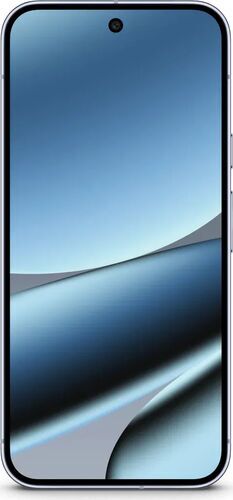
Pixel 11 Pro XL vs Galaxy S26 Ultra: specs side by side

From £687.00
Chip
Snapdragon 8 Elite Gen 5
Front Camera
12 MP
Max Zoom
100x
Battery
5000 mAh
Charging
60W wired
Weight
214 g

vs.
Pixel 11 Pro XL
Tensor G6 (7-core)
42 MP
120x (AI-assisted)
5,115 mAh (typical)
45W wired, 25W magnetic
226 g
Contents
- Camera showdown: a fishing rod versus a net
- Performance and gaming: does the Tensor G6 keep up?
- Battery, charging and the magnet question
- Pixel 11 Pro XL or Galaxy S26 Ultra: concierge or cockpit?
- Beyond the factory gate: clean power and material origins
- Buying either one refurbished: what you actually gain
- The environmental cost of a brand-new phone: the boulder and the pebble

Camera showdown: a fishing rod versus a net
The Galaxy S26 Ultra hands you more lenses and more manual control, a proper fishing rod. Four rear cameras, a 200MP main sensor and an extra focal length most phones skip, plus punchier, more detailed daylight footage and colour.
The Pixel 11 Pro XL casts a net instead. Magic Capture analyses hundreds of frames from a burst and picks the best ones for you. It pulls ahead in ultra-wide video, stabilisation and low-light photo brightness, and its 42MP front camera has far more resolution than the Galaxy's 12MP, though megapixels alone do not decide a selfie.
About that 120x zoom headline: part of it is generative reconstruction rather than optical detail past roughly 30x. One photographer testing the phone chose not to use it for that reason, so treat the number as a party trick, not a promise of real detail at full range.
Magic Capture is built for chaos: kids, pets, dancing, anything that will not sit still for a normal shot. It scans hundreds of frames from a burst and pulls out the ones with a good expression or pose. In a controlled demo it worked convincingly, though that is not proof it holds up in a dim restaurant or chasing a fast-moving dog. Early hands-on testing found the 120x result surprisingly usable, even if keeping a distant subject inside the viewfinder in the first place was the harder part.
Worth knowing before launch-week hype settles: some Galaxy S26 Ultra owners reported soft, blurry 3x telephoto shots. Samsung pushed a software fix, though reports differ on how complete it is, so test that lens yourself during the return window.
Performance and gaming: does the Tensor G6 keep up?
Early Geekbench figures put the Tensor G6's 7-core design behind the Galaxy's Snapdragon 8 Elite Gen 5, and by a wide margin. Take that gap with a pinch of salt though: the comparison mixed Geekbench 6 results for the Galaxy against Geekbench 7 for the Pixel, and the two versions do not score the same workloads the same way. PhoneArena's own test of the Pixel 11 Pro XL points the same way: the Tensor G6 is faster than last year's chip, but the Snapdragon is still far ahead.
Directionally, the pattern still holds. If you game for hours, run demanding apps side by side, or push the phone through sustained, heavy tasks, the Galaxy S26 Ultra is the safer bet for staying smooth under load. For everyday use, browsing, messaging, social media and casual photos, either chip handles the job without drama.
Battery, charging and the magnet question
On paper the batteries are close, the Galaxy's 5000mAh cell against the Pixel's 5115mAh (Google lists that as typical, with 5000mAh as the minimum). On the manufacturers' own efficiency-style ratings, the Galaxy edges it, rated for 55 hours against the Pixel's 50 hours 10 minutes.
The Galaxy charges faster on paper, 60W wired against the Pixel's 45W, and is rated for more cycles before dropping to 80% capacity, 1200 against 1000. Independent lab testing measured 17 hours 52 minutes of continuous Wi-Fi browsing on the Galaxy, and a full charge in under an hour. In Tom's Guide's own battery test, continuous 5G web browsing at 150 nits, the Galaxy lasted 16 hours 10 minutes and the Pixel 11 Pro XL 14 hours 28 minutes. The Pixel keeps built-in Qi2 magnetic charging out of the box. The Galaxy has no built-in magnets this generation, so magnetic accessories need a case.
Real-world reports vary widely, which is normal. One long-term Galaxy owner had roughly half the battery left after 5 hours 37 minutes of screen time across two Wi-Fi-heavy days, and over 35% remaining after a day mixing navigation, Android Auto and cellular streaming. Another reviewer averaged 7 to 8 hours of screen time but occasionally ran low by evening. Your own mix of apps, signal strength and screen brightness will matter more than either spec sheet.
Pixel 11 Pro XL or Galaxy S26 Ultra: concierge or cockpit?
The Pixel plays concierge: calmer stock Android, fewer controls and a phone that tries to anticipate what you need. HiLight lets you leave it face-down and still recognise a favourite caller or check on Gemini. It cannot currently show full message notifications app by app, though, so it is more cue light than notification centre. The Galaxy is the cockpit, with modes and deep customisation, but also duplicate apps and more Samsung account prompts.
Despite its 6.9-inch display and built-in stylus, the Galaxy S26 Ultra is the lighter, thinner phone at 214g and 7.9mm, against the Pixel 11 Pro XL's 226g and 8.5mm.
The Galaxy's Privacy Display can shield a password, notification or chosen app from sideways glances. Some forum users report eyestrain or fuzzy text, even with privacy mode off, and associate it with low-frequency dimming; a smaller number report a reddish or pink tint. Samsung has not confirmed a cause for the eyestrain reports. It traced the tint to calibration and began rolling out a software fix in August, though some owners still saw it after updating. Most units, review units included, show neither issue. If you are sensitive to screen flicker or want reassurance, spend 10 to 15 minutes with one in store before deciding.
Choose the Galaxy S26 Ultra if you game, multitask hard or want the S Pen and DeX for desktop-style work. Check stock on the Galaxy S26 Ultra page.
Choose the Pixel 11 Pro XL if selfies, magnetic accessories or AI-camera tools such as Camera Looks, Magic Capture and simultaneous RAW plus JPEG capture matter more to you. It is already sold refurbished too, so you no longer have to pay the full launch price.
Want a Pixel refurbished now instead? The Pixel 10 Pro XL covers much of the same ground for meaningfully less, with a warranty attached.
If AI-reconstructed photos worry you, the caveat is specifically the Pixel's zoom past 30x, not its other photo tools, which work from frames you shot. And if the price rise or ‘not hot’ reaction gives you pause, that hesitation is doing its job. Buying either flagship refurbished sidesteps the launch premium.
Beyond the factory gate: clean power and material origins
If supply-chain responsibility matters to you, look beyond each brand's own sites to the factories supplying its phone components. Google asks major hardware suppliers to match their electricity use with clean power by the end of 2029. Samsung's cited renewable-electricity and zero-waste claims mainly concern its own operations. Neither tells you that every upstream supplier uses clean electricity today.
Then ask how far the materials can be traced. Neither the Pixel 11 Pro XL nor the Galaxy S26 Ultra has mine-by-mine sourcing information for cobalt, lithium and rare-earth materials. The practical questions are who powers the component suppliers and where those materials originated.
Buying either one refurbished: what you actually gain
Refurbished sits between new and second-hand: every device on refurbed is professionally tested, cleaned and reset, backed by a minimum 12-month warranty and a 30-day trial, so you are not gambling the way you would on a random second-hand listing.
Flagship prices move fast once a refurbished market opens up behind them, and the starting point only climbs each year: the Pixel 11 Pro XL launched at about £1,200 in Germany, £90 more than its predecessor, while the Galaxy S26 Ultra, seven months older, already sells for under £850 at German retailers despite a launch price of £1,240. That gap only grows once a phone reaches the refurbished market instead of being bought new at launch.
Right now, both the Galaxy S26 Ultra and the Pixel 11 Pro XL can be bought refurbished: in Germany, a 256GB Pixel 11 Pro XL was listed at about £750 on 24 November. If you want a Pixel one generation back, the Pixel 10 Pro XL is refurbished and available now.
Here is the number worth remembering before the next section: one avoided replacement can outweigh a phone's entire factory-fresh carbon footprint. Buying either phone once it reaches the used or refurbished market matters more than which one produces less carbon on day one.
The environmental cost of a brand-new phone: the boulder and the pebble
Manufacturing is the boulder. Charging is the pebble. For both phones, building the device accounts for 85 to 89% of its entire three-year carbon footprint, so nothing you do with the charger afterwards moves the number much.
By each manufacturer's own published figures, the Pixel 11 Pro XL carries a three-year footprint of about 81kg CO2e, roughly 68.9kg of that from production alone. The Galaxy S26 Ultra reports about 47.8kg CO2e overall, roughly 42.6kg from production, some 38 to 41% lower than the Pixel. The two reports use different methodologies and electricity assumptions though, so treat that gap as directional rather than a lab-grade fact.
Neither line is heading cleanly downward, either. Google's own reports show 73kg for the Pixel 9 Pro XL, 89kg for the Pixel 10 Pro XL, then 81kg for the Pixel 11 Pro XL: better than last year, still above the Pixel 9. Samsung moved from 48.9kg to 47.8kg across the same two generations, essentially flat. The Pixel 11 Pro XL also carries a Silver UL ECOLOGO rating this year, down from Gold on the Pixel 10 Pro XL, a downgrade Google has not explained.
It is not a clean win for Samsung once you look past carbon. The Pixel uses far more recycled material, at least 33% of its weight against Samsung's 17.7%, including a fully recycled aluminium frame. It also scores better on the EU repairability index, class B at 3.71 against the Galaxy's class C at 3.08. The Galaxy pushes back with a longer battery life, 1200 charge cycles to 80% capacity against the Pixel's 1000, and a harder, more scratch-resistant screen, Mohs 6 against Mohs 4. An early independent teardown scored the Galaxy S26 Ultra 5 out of 10 for repairability: the battery and USB-C port come out reasonably easily, but replacing the display destroyed the test unit's panel and is quoted at £341. For the Pixel 11 Pro XL, JerryRigEverything's teardown called it one of the easiest phones of 2026 to repair, though without a comparable score.
None of these percentages matter as much as the actual lever available to you. Already have a working flagship? Keeping it beats buying either one of these new. If you are buying regardless, choosing either phone once it is used or refurbished skips the boulder entirely, which counts for more than any gap between two brand-new footprints. That is the real math behind buying used instead of new. See what is in stock now.
Pixel 11 Pro XL vs Galaxy S26 Ultra: FAQs
Is the Pixel 11 Pro XL available refurbished yet?
Yes. In Germany, a refurbished 256GB unit was listed at about £750 on 24 November. The Pixel 10 Pro XL is a refurbished Pixel option one generation back.
Which phone has the better camera?
Neither, outright. The Pixel wins on ultra-wide video, stabilisation, low-light photos and selfie resolution. The Galaxy wins on daylight detail, colour and lens variety. The right answer depends on what you shoot most.
Is the Galaxy S26 Ultra's 3x camera issue fixed?
Samsung acknowledged the soft, blurry 3x telephoto shots some owners reported and released a software fix. Reports differ on how complete it is, so test that lens yourself during your return window.
Which phone is more environmentally friendly to produce?
It depends what you weigh most. The Galaxy S26 Ultra reports a lower carbon footprint. The Pixel 11 Pro XL uses more recycled material and scores better on repairability. Buying either one refurbished beats a brand-new unit of either.
Is the Pixel 11 series actually well received?
Reaction was mixed at launch: in a self-selected poll of nearly 15,000 Android Authority readers, 73% called the series ‘not hot’, largely over the price rise and modest hardware gains. Three months on, about 74% of the 596 readers who said they bought a Pixel 11 Pro chose the most positive answer in the outlet's November poll.
Should I buy the Pixel 11 Pro XL or the Galaxy S26 Ultra refurbished?
Both are sold refurbished now. The Galaxy has more owner history behind it, and the Pixel is newer. Gaming, the S Pen and DeX point to the Galaxy, magnetic accessories and Google's camera software to the Pixel.
Is the Pixel 11 a big upgrade over the Pixel 10?
Not for most owners. The gains are a better telephoto camera and faster wireless charging, against a higher price. Our Pixel 11 vs Pixel 10 comparison explains what changed and why a refurbished Pixel 10 is often the better buy.

Sign up for our newsletter for the first time and save £15!
Never miss an offer again.
Information about the use of personal data can be found in our Privacy policy.
Get the refurbed app
For iOS and Android



Confirm sign-up
Almost done: We’ve sent you a confirmation email
- © Refurbed Marketplace GmbH
- Accessibility
- T&C
- Privacy Policy
- Imprint
- Legal Notices
- Cookie Policy