Sustainable Black Friday electronics: how to buy without avoidable waste
A device you buy on Black Friday can stop doing its job long before it stops working. That is avoidable waste: a service ends, a previous owner's lock remains, a cable slows data transfers, the picture is too dim or a badge means less than you assumed.
Five documented causes show how this happens, and each has a check that would have caught it. A thermostat and a camera stopped connecting to their apps when support for them ended. A used phone and a former business laptop can stay tied to a previous owner after a reset. A USB-C cable that charges at up to 240 W moves data at USB 2 speed. With the same projector, a 150-inch image gets about 44% as much light per unit area as a 100-inch image. And a Copilot+ badge does not settle whether your own software and accessories will work.
Buying a used device that will keep meeting your needs offers a chance to reduce waste, not a guarantee that fewer new devices will be made or old ones thrown away. When you compare offers, you can find one through refurbed's Green Friday. Black Friday is Friday 27 November 2026, and Cyber Monday is Monday 30 November.
Service shutdowns and Black Friday purchases: features that still work and the role of Matter and Thread
Nest and Dropcam. These two cases show what still works when a maker ends the service that supports a device's app. On 25 October 2025, app connectivity and support ended for the first and second generations of the Nest Learning Thermostat, including the European second generation. The thermostat's on-device temperature controls, settings and existing schedules kept working, but its remote and other connected functions stopped working. Support for Dropcam and Dropcam Pro ended on 8 April 2024, and the cameras could no longer connect to the app, stream or record video.
The risk isn't just the price of a subscription: a maker can end a service the device relies on.
Matter and Thread. A Matter controller manages compatible devices. A Thread border router connects a Thread network to the home IP network. One hub can hold both roles, but the roles are not interchangeable. Google lists its Nest Mini and the first generation Nest Hub as Matter hubs over Wi-Fi, but neither is a Thread border router. The second generation Nest Hub does both. Matter supports local communication for compatible functions. It does not guarantee that a maker will keep its service running indefinitely or that every platform will offer the same features. A device can have local Matter control while other functions still depend on the maker's cloud service.
The EU Data Act. The EU Data Act is an EU rule that generally began applying on 12 September 2025. Its obligation to make data accessible by design covers connected products and related services placed on the market after 12 September 2026. A purchase in autumn does not prove that a unit was first placed on the market after 12 September 2026. Within the Act's scope, data must be accessible, with direct access where that is relevant and technically feasible. If direct access is unavailable, the data holder's access route remains an option for accessing it. The obligation does not provide a replacement service, a local control interface, source code or a cloud service that will run forever. Outside the EU, look for separate evidence that the device offers the same data-access features.
The check: Before you buy an older or connected device, ask three questions.
- Which functions survive? Find out which useful functions work without the maker's service. Seeing the device power on won't tell you that.
- Which roles does the hub hold? For a Matter-over-Thread device, find out what will act as its Matter controller and its Thread border router, and which functions your chosen platform lets you use.
- Can the data leave the app? If the device's data has lasting value, ask for a description of the usage and performance data available. Ask for either a documented interface for retrieving it or a working export, and find out how to authorise third-party access.
Locks that survive a reset on used Black Friday electronics
A reset can clear a device without releasing it from an old account or organisation.
Phones and tablets. Imagine inspecting an erased iPhone: setup can still ask for the previous owner's account. Erasing it alone does not remove Activation Lock, and Apple advises against taking ownership of a used iPhone or iPad while that lock remains. Check that the device activates normally without the previous owner's credentials.
Former business PCs. A former business laptop may arrive freshly reset, but that local reset cannot tell you whether it has been deregistered from Windows Autopilot. Microsoft says devices that permanently leave an organisation should be deregistered from Autopilot. That is separate from removing them from device management and Microsoft Entra ID. Ask the seller to confirm that the PC has been deregistered from Windows Autopilot and removed from device management and Microsoft Entra ID. Then check that you can set it up online as usual without being asked for the previous organisation's account. If a registration problem appears, ask the seller to resolve it through the original owner or the platform.
Game libraries. Suppose a seller advertises a handheld PC with their Steam account. The library on that account may look like part of the bundle, but it does not transfer to you. Valve's Steam Subscriber Agreement generally prohibits transferring or selling accounts and subscriptions, except where Valve expressly permits it. Do not count access to that library when comparing bundles. A legitimate, unused activation code is different: it offers access separately from the seller's account. Check the conditions that apply to the code.

Cables: why a 240 W rating says nothing about data speed
A cable can support charging at up to 240 W and still transfer data at USB 2 rates: Apple's two-metre 240 W USB-C Charge Cable does both. So when you choose a cable for your laptop, its USB-C connector and charging rating tell you nothing about how fast it moves files.
Say you are moving a hypothetical 100 GB of files from an SSD to your laptop: at an ideal raw rate of 480 Mbit/s, the transfer takes at least about 27.8 minutes; at 10 Gbit/s, it takes 80 seconds. Both calculations use decimal gigabytes and leave out overhead, so real transfers take longer. The computer and the storage device can limit the speed further. A cable's charging rating tells you how much power it can carry, not how fast it transfers data.
The EU's common-charger rules deal with compatibility between devices and chargers, not a cable's data speed or display support. They extended to covered laptops from 28 April 2026 and apply to devices newly placed on the market from the date the rules take effect for them. Older stock placed on the market before that date can still be sold. Devices may have proprietary charging connectors in addition to USB-C.
The check: If you need a cable for an SSD or another data-heavy task, look up its data specification. If you plan to connect a monitor, check separately whether the cable supports displays.

Big projector images and Copilot+ badges: will they fit your room and workload?
A projector's advertised image size and a laptop's Copilot+ badge sound reassuring. Neither alone tells you whether the picture will work in your room or the laptop will suit your usual software and accessories.
Start with what the specifications measure. Epson specifies its projectors' white brightness using ISO 21118 and colour brightness using IDMS 15.4. A lumen figure naming neither standard cannot be compared on equal terms with one that does; find out how bright the projector is in a picture mode you would use, too. Microsoft's published Copilot+ minimums include a compatible processor with a 40+ TOPS NPU, 16 GB of DDR5 or LPDDR5 memory and 256 GB of SSD or UFS storage. A total adding CPU and GPU operations does not establish that the NPU meets the 40 TOPS threshold. AMD, Intel and Snapdragon platforms all qualify, so the badge does not identify one processor architecture.
Then check the space the projector needs. For a 100-inch 16:9 image, about 2.21 m wide and 1.25 m high, a throw ratio of 1.2 puts the lens about 2.66 m from the screen. Throw ratio is projection distance divided by image width. Use the model's installation diagram to locate the lens, allowing for the housing, zoom and mounting position.
Image size also changes how far the light goes. Increase the image from 100 to 150 inches and its area becomes 2.25 times as large. If delivered light and screen gain stay the same, each square metre of the larger image receives about 44.4% as much light as a square metre of the smaller one. That does not predict contrast under ambient light, but it explains why the bigger advertised picture can look less convincing.
The check: Decide on picture size and installation distance first, then choose projector optics suited to both. For a laptop, look up each feature's requirements and confirm that your software and accessories are compatible; the badge alone confirms neither. The guide to Windows laptop updates covers Copilot+ minimums and Arm driver compatibility in more detail.
Those practical limits matter even on a qualifying laptop. If you try to use Paint Cocreator on a train without a connection, Microsoft says it needs an account and internet access to cloud services that carry out responsible-AI checks. Local AI processing does not make every feature available offline. On Windows on Arm, Microsoft warns that peripherals and applications relying on drivers without compatible Arm support, and games with incompatible anti-cheat drivers, may not work. Your accessories and software may need compatible Arm drivers.
Local AI: choose the model and runtime before the laptop
Want to run a particular AI model locally? Identify the model and the software runtime before choosing a laptop. Check that both are supported on the processor that will actually execute the workload.
Then seek evidence of performance in the application you intend to use. Copilot+ eligibility does not establish how that particular application will run: processor support and application performance are separate checks.
Green Friday: sustainable Black Friday electronics that already exist
Green Friday is refurbed's own version of the November sales campaign: sustainability on top of mere savings.
The Green Friday page says refurbished iPhones, MacBooks and iPads cost up to 40% less than new. That's the campaign page's claim, comparing prices with those of new devices; “up to” means the best-case saving, not an average. A refurbished device has been used, then professionally tested, cleaned and reconditioned before being sold again. Its condition grade describes appearance only.
Saving money is one reason to choose Green Friday; reducing waste is another. Making a new device and disposing of an old one both create waste. A refurbished device has already been made, tested and sold again, so buying one keeps it in use for longer. But it avoids making a new device only if you would otherwise have bought a new one.
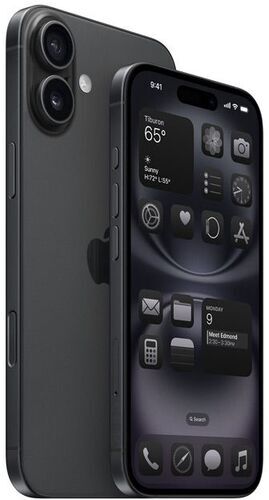
Take one case: at launch, Apple estimated the carbon footprint of the 128 GB iPhone 16 in its US configuration at 56 kg CO₂e, including packaging and in-box accessories. It attributed 80% of that total to production and 18% to use. For use, it assumed three years of power use by the first owner; that's a modelling period, not a declared lifespan. Apple's estimate covers one named configuration from one maker, not the emissions saved by any refurbished purchase. To claim avoided emissions, you'd need to say what you're comparing a refurbished purchase with and which new device you assume would otherwise have been made or bought. What the estimate does show is that most of this phone's footprint arises before it reaches its first owner.
Reuse and recycling answer different parts of the waste problem. The Global E-waste Monitor 2024 reports that 62 million tonnes of e-waste were generated in 2022, with 22.3% documented as formally collected and recycled. Those global figures can't tell you what one purchase avoids. Refurbishment reduces waste only when it keeps a device in use for longer or preserves useful components. The device still needs to be recycled at the end of its life. Recycling can recover some material, but reuse keeps the device working as a whole and makes further use of the effort that went into making it.
If you want to weigh the environmental case yourself, the guide to early hardware failures looks at research on the carbon footprint of refurbished devices and when the benefit shrinks. Our blog post on Europe's e-waste recycling gap looks more closely at recycling.
If you're comparing Black Friday prices anyway, include a refurbished device. When comparing offers for new or refurbished devices, use whichever of the five checks apply to that type of device.
Sustainable Black Friday electronics: common questions
What still works when a smart-home company ends its app service?
When app connectivity ended for the first and second generation Nest Learning Thermostat on 25 October 2025, its on-device controls, settings and schedules kept working, but its remote and connected functions did not. When support ended for Dropcam and Dropcam Pro on 8 April 2024, the cameras could no longer connect to the app, stream or record video.
What is the difference between a Matter controller and a Thread border router?
A Matter controller manages compatible devices; a Thread border router connects a Thread network to your home network. One hub can do both jobs, but the roles are not interchangeable. Google lists the first generation Nest Hub as a Matter hub over Wi-Fi, not a Thread border router; the second generation does both.
Can a wiped iPhone still be locked to its previous owner?
Yes. Even after an iPhone has been erased, setup may ask for the previous owner's account. Apple advises against taking ownership of a used iPhone or iPad while Activation Lock is still on. Before you accept it, check that it activates normally without the previous owner's credentials.
Does a used company laptop need to be released from Windows Autopilot?
Yes, if it has left its organisation for good. Microsoft says such devices should be deregistered from Windows Autopilot, which is separate from removal from device management and Microsoft Entra ID, and a local reset does not show that it happened. Ask the seller to confirm the full organisational release.
Does a 240 W USB-C cable transfer data fast?
Not necessarily. Take Apple's two-metre 240 W USB-C Charge Cable: it charges at up to 240 W, yet transfers data at USB 2 rates. For a hypothetical 100 GB transfer, the theoretical minimum is about 27.8 minutes at 480 Mbit/s, compared with 80 seconds at 10 Gbit/s. Check the cable's data specification, not just its charging rating.
Does a bigger projector image look dimmer?
Yes, per area of screen. A 150-inch image has 2.25 times the area of a 100-inch one, so with the same delivered light and screen gain, each part gets about 44.4% as much light. That figure does not predict the contrast you will see under ambient light.
Does a Copilot+ laptop work offline?
Not every feature does. Microsoft says Paint Cocreator needs an account and internet access to cloud services that run responsible-AI checks; local AI processing does not mean everything works offline. Before you rely on a feature, check its hardware requirements and whether it needs an account or an internet connection.
What does the EU Data Act change for smart devices I buy?
For connected products and related services placed on the market after 12 September 2026, EU rules require data access to be built in, directly where relevant and technically feasible. They give no replacement service, local control interface, source code or perpetual cloud, and an autumn purchase does not prove a unit was placed on the market after that date.
Explore Green Friday and choose a device that already exists
The Green Friday offers let you choose a refurbished device instead of buying new. Use the five checks to help you choose a Black Friday deal on a device that will remain useful.
refurbed is a marketplace built on reuse. It has won the ESG Innovation Award at the Business & Finance ESG Awards 2023 and the TRIGOS 2022 award for responsible business in the Social Innovation & Future Challenges category.
Every device is covered by a minimum 12-month warranty, and you have 30 days to return it. Browse the Green Friday offers and choose one that suits you.


Sign up for our newsletter for the first time and save £15!
Never miss an offer again.
Information about the use of personal data can be found in our Privacy policy.
Get the refurbed app
For iOS and Android


Confirm sign-up
Almost done: We’ve sent you a confirmation email
- © Refurbed Marketplace GmbH
- Accessibility
- T&C
- Privacy Policy
- Imprint
- Legal Notices
- Cookie Policy